AC Gear Motor Overheating: 6 Causes and How to Fix Them
A hot gear motor is a symptom. Six causes that explain almost every overheating complaint, the temperature numbers that define too hot, and a ten-minute diagnostic.
Đọc thêm
Indonesia is the easiest market in ASEAN to buy a Chinese gear motor for, and the hardest one to import into without a broker who knows the paperwork. The electrical match is almost perfect. The customs chain is not.
This guide is for the Indonesian OEM buyer, machine builder and distributor who is sourcing a động cơ giảm tốc AC cỡ nhỏ directly from a Chinese factory and wants to understand what happens between the quotation and the goods arriving at Tanjung Priok. It covers the voltage position, the import chain in plain terms, the documents involved, what lands on the cost, when SNI and TKDN actually apply, and the sizing pattern that repeats across Indonesian machine builds.
Direct import works well when four items are settled in advance. When one of them is not, the order stalls at the port or at the bank.
Indonesia distributes 220 V single-phase and 380 V three-phase at 50 Hz. That is exactly what the Chinese standard catalogue motor is wound for. There is no voltage derating to think about, no re-winding, and no negotiation with the factory about a special voltage.
This matters more than it sounds. Compare the three main ASEAN destinations:
| Market | Single-phase | Three-phase | Tần số | Match with a 220/380 V 50 Hz catalogue motor |
|---|---|---|---|---|
| Indonesia | 220 V | 380 V | 50 Hz | Exact — no change needed |
| Malaysia | 240 V | 415 V | 50 Hz | +9% over-voltage — specify a 240/415 V winding |
| Philippines | 230 V | 400 V | 60 Hz | Voltage close, frequency wrong — speeds change |
| Vietnam | 220 V | 380 V | 50 Hz | Exact |
For an Indonesian buyer, the motor you receive has been tested at the voltage and frequency it will see in your plant. The only remaining electrical question is single-phase versus three-phase, and that is a site question rather than an import question. If you are unsure which to order, the single-phase vs three-phase guide covers the decision by application rather than by preference.
Six steps happen between the factory gate and your warehouse. Understanding where each one can stall is the difference between a four-week order and a ten-week one.
| Bước | Điều gì sẽ xảy ra | Where it stalls |
|---|---|---|
| 1. Purchase order and payment | Contract, proforma invoice, deposit or letter of credit | Payment terms not agreed in writing; bank needs a contract to open an L/C |
| 2. Production and inspection | Manufacture, routine test, packing | Specification still moving after the deposit is paid |
| 3. Export and shipping | Export declaration, Form E issuance, booking, bill of lading | Form E issued after the vessel sails — the preferential rate is then lost |
| 4. Arrival and PIB | Broker files the PIB against your API-U | Tariff line misclassified, or Lartas approval missing |
| 5. Duty and tax payment | BM, PPN, PPh 22 paid before release | Landed-cost estimate was short, so the buyer has to find cash at the port |
| 6. Delivery | Container released, trucked to your site | Port congestion, or delivery address not matching the PIB |
Step 3 is where most first-time importers lose money quietly. A Form E issued after departure, or with a description that does not match the invoice, is rejected by the customs system and the shipment reverts to the MFN rate. Agree with the supplier, in writing, that the Form E is issued before the vessel departs.
Indonesian import cost has four layers on top of the FOB price. Rates change, so treat the values below as structure, not as a quotation — your broker confirms the current numbers.
| Layer | Basis | Notes |
|---|---|---|
| Bea Masuk (import duty) | Percentage of customs value | MFN rate applies unless Form E brings it to the ACFTA preferential rate |
| PPN (value added tax) | Percentage of customs value plus duty | Creditable for a PKP-registered company; a real cost for a non-PKP buyer |
| PPh 22 (advance income tax on import) | Percentage of customs value plus duty | Higher rate without an API-U; creditable against annual corporate income tax |
| Forwarding, broker, port and trucking | Per shipment and per container | Fixed-ish per shipment, which is why small orders carry a disproportionate overhead |
The practical consequence: PPN and PPh 22 are recoverable for a properly registered company, so they affect cash flow rather than margin. Duty and forwarding affect margin directly. When you compare a local distributor’s price against a direct import, compare against FOB plus duty plus forwarding — not against FOB alone, and not against the all-in figure including recoverable taxes.
There is one more structural point. If you import into Batam or another free-trade zone, the duty and tax treatment differs from the mainland, provided the goods are consumed within the zone. If your plant is in Batam, say so at enquiry stage; it changes the shipping route and the paperwork.
Two Indonesian requirements get raised in almost every first conversation, and both are frequently over-applied.
SNI (Standar Nasional Indonesia). Indonesia applies mandatory SNI to a defined list of products. Whether a gear motor falls inside that list depends on the product category and on how it is placed on the market. A motor supplied as a component inside a machine is generally addressed through the machinery’s own conformity route; the same motor sold as a standalone electrical product to end users is a different question. Do not accept a blanket “SNI does not apply to motors” or a blanket “everything electrical needs SNI”. Ask your broker to check the current mandatory-SNI list against your specific product.
TKDN (local content). This is a procurement rule, not an import rule. It applies when you are bidding for government or state-owned-enterprise projects that carry a local-content requirement. A gear motor manufactured in China carries zero TKDN. If your customer is a state-owned utility or a government project, plan for that in the bid rather than discovering it at evaluation. For private-sector industrial buyers, TKDN normally has no bearing.
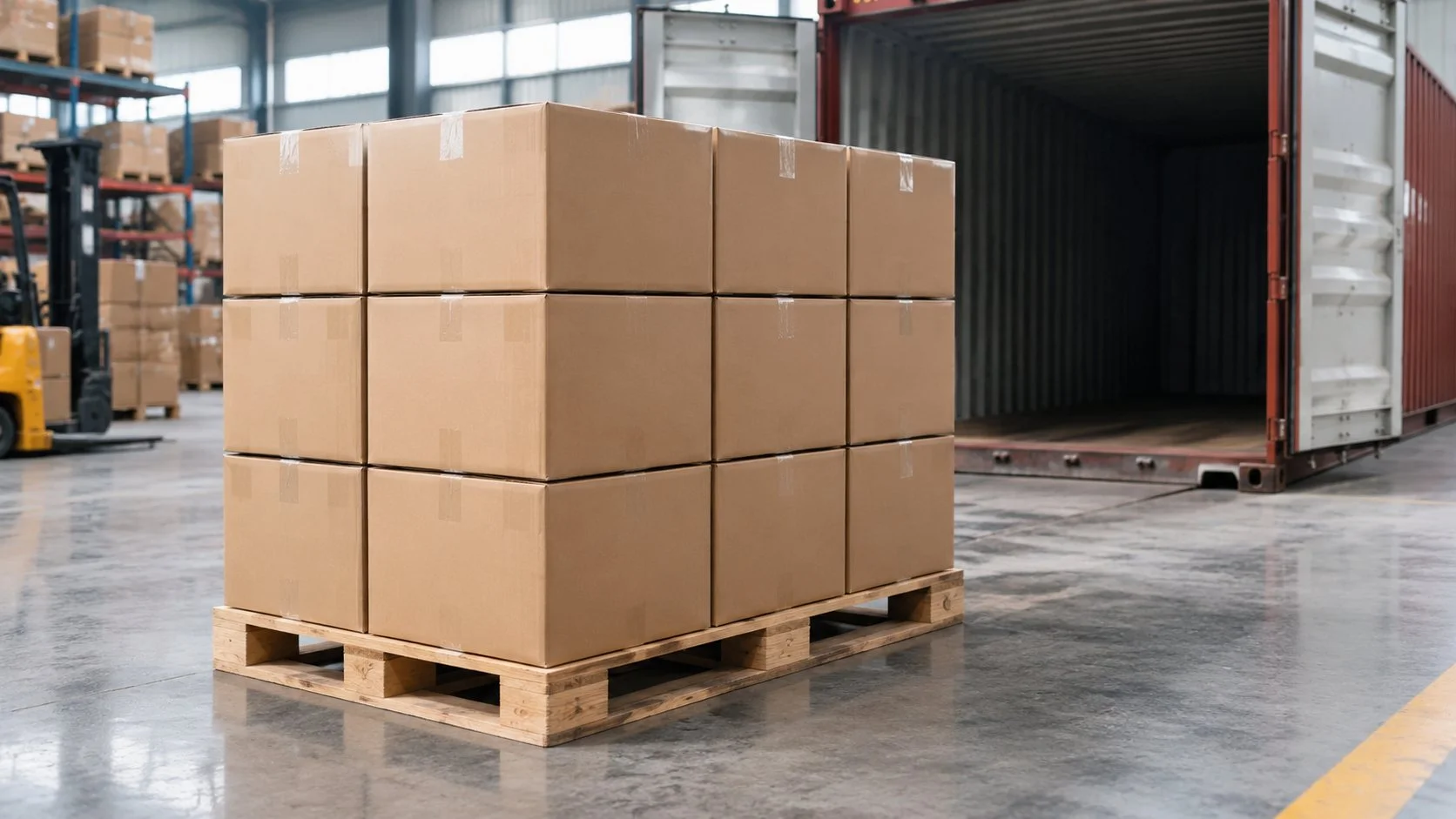
| Lane | Typical transit | Notes |
|---|---|---|
| South China to Tanjung Priok (Jakarta) | 7–14 days | Most frequent sailings; usually the cheapest per cubic metre |
| South China to Tanjung Perak (Surabaya) | 8–15 days | Direct calls are fewer; some cargo tranships via Jakarta |
| South China to Belawan (Medan) | 10–18 days | Commonly tranships; plan extra buffer |
| South China to Batam | 5–10 days | Shortest lane; free-trade-zone rules apply on arrival |
Add 5–10 working days for production on a catalogue specification, 15–25 for a custom ratio or shaft, and 3–7 working days for clearance and delivery. Four to six weeks door to door is a realistic plan for a stock specification.
Indonesian industrial estates are well served by distributors in Jakarta, Surabaya and Medan. They are the right answer in specific situations and the wrong answer in others.
| Situation | Better route | Reason |
|---|---|---|
| Emergency replacement on a running line | Local distributor | Availability, not price, is the product |
| One-off machine, quantity under 20 | Local distributor | Import overhead per shipment dominates |
| Repeat OEM production, frozen specification | Direct import | Removes two layers of margin on a stable item |
| Custom ratio, custom shaft, or a 240/415 V or 60 Hz variant | Direct import | Distributor stock is catalogue specification only |
| Product that must carry a specific brand for the end customer’s approval | Local distributor | Brand approval is the constraint, not cost |
The break-even generally sits between 20 and 50 units per shipment. Below that, freight, broker fees and minimum charges eat the saving. Above it, the unit-price gap compounds and direct import becomes clearly cheaper.
Three applications come up consistently in enquiries from Indonesian machine builders.
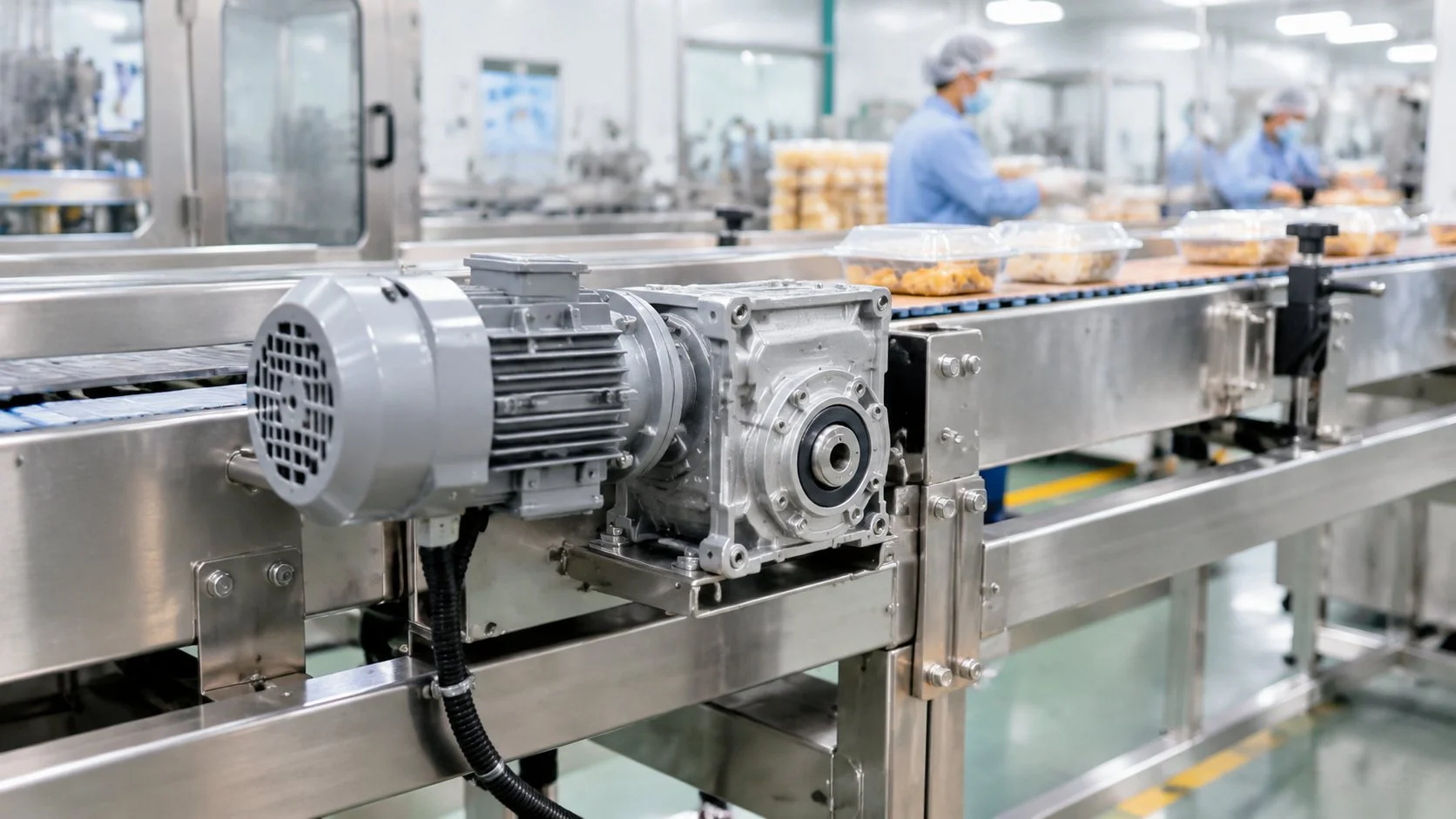
Packaging and filling equipment. The 60–120 W band dominates. A 120 W AC gear reducer motor at 25:1 to 50:1 covers most conveyor, sealing and labelling stations. Buyers who specify 300 W “for headroom” usually find the gearbox no longer fits the frame they designed.
Food processing and small mixers. Higher torque at low output speed. The 300 W unit in the 100 mm frame is the usual step up, and the point that matters is the allowable output load at your target speed, not the wattage. Agitator and mixer duty has an additional constraint that is easy to miss: the gearbox output bearing is not designed to carry axial thrust from the impeller, so a separate bearing housing and a flexible coupling are normally required.
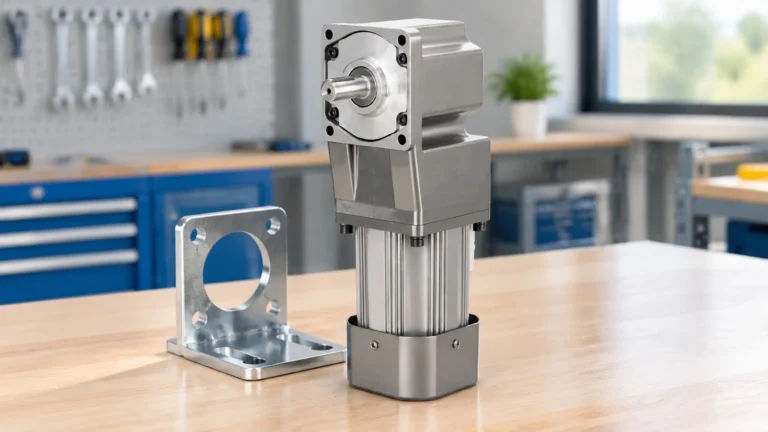
Confined frames needing a 90-degree output. Where the motor cannot sit inline with the driven shaft, a 120–300 W right-angle gear reducer motor removes the belt or chain stage. Check the frame height and the output shaft position before assuming a parallel-shaft unit will fit.
One environmental note for Indonesian plants: standard totally enclosed fan-cooled motors are rated at 40 °C ambient. A motor inside an unventilated cabinet in a hot plant sees the cabinet temperature, not the room temperature. If the cabinet sits in direct sun, that can be 15 °C above the room. Derate accordingly.
| Sai lầm | Consequence | Fix |
|---|---|---|
| Ordering before confirming the HS line and Lartas status | Container held at port, demurrage accumulating | Have the broker check the eight-digit line first |
| Form E issued after vessel departure | Preferential duty lost, MFN rate applies | Make pre-departure Form E a written order condition |
| Consignee name differs from the importer of record | PIB rejected, amendment fees | Match invoice, B/L and API-U holder exactly |
| Importing without API-U and without a service importer | Shipment cannot be cleared in your name | Use a licensed import-service company for the first order |
| Budgeting duty only | Cash shortfall at the port | Ask for a full landed-cost sheet before ordering |
| Assuming TKDN is irrelevant | Lost tender at evaluation | Check whether the end customer is a government or SOE project |
Send the application details, and add these four lines so the quotation is importable rather than just priced:
Cái quotation and RFQ guide covers the eight specification fields that change the price, and the MOQ, lead time and sample policy sets out how sample units and first orders are handled. If you also ship into Malaysia, the Malaysia supplier guide covers the 240/415 V difference that does not apply to Indonesia.
Yes. Indonesia’s low-voltage supply is 220 V single-phase and 380 V three-phase at 50 Hz, which is exactly the Chinese catalogue standard. No re-winding or voltage derating is needed.
Electric motors fall under HS 8501. Under the ASEAN–China FTA, most motor lines reach a zero preferential rate with a valid Form E. The MFN rate applies if the Form E is missing or rejected. Confirm your eight-digit line with a licensed broker.
To clear a commercial shipment in your own company name, yes. Without an API-U, the usual route is to import through a licensed import-service company or a trading partner that holds one. This is a common arrangement for a first shipment.
For a company registered as a PKP (taxable entrepreneur), PPN paid at import is creditable. For a non-PKP buyer it is a real cost. PPh 22 is an advance income tax and is creditable against annual corporate income tax.
Typically 7–14 days port to port to Tanjung Priok, 8–15 to Tanjung Perak, and 10–18 to Belawan. Add 5–10 working days production for a catalogue specification and 3–7 working days for clearance.
TKDN is a local-content requirement attached to government and state-owned-enterprise procurement, not a general import rule. An imported gear motor has zero TKDN. If your customer is a private industrial buyer, it normally does not apply.
If you are setting up a first direct import for an Indonesian build, send the load details, output speed, duty cycle, mounting and destination port. We will come back with a configuration, a specification you can build around, and an export document set that your broker can clear.