সমান্তরাল শ্যাফট বনাম রাইট-অ্যাঙ্গেল গিয়ার মোটর: কোনটি আপনার মেশিনের জন্য উপযুক্ত?
রাইট-অ্যাঙ্গেল বনাম ইনলাইন গিয়ার মোটর: বাস্তব অনুমোদিত লোড টেবিলের তুলনায় দক্ষতা, টর্ক, স্ব-লকিংয়ের মিথ এবং পাঁচ ধাপে কীভাবে সিদ্ধান্ত নেবেন।.
আরও পড়ুন
যদি আপনি একটি গিয়ার রিডাকশন মোটর নির্বাচন বা প্রতিস্থাপন করেন, তাহলে গিয়ার অনুপাত সাধারণত প্রথম স্পেসিফিকেশন যা আপনাকে নির্ধারণ করতে হয়। এটি নির্ধারণ করে আউটপুট শ্যাফট কত দ্রুত ঘুরবে, মেশিনটি কতটুকু টর্ক পাবে, এবং ড্রাইভ আপনার অ্যাপ্লিকেশনের সাথে সামঞ্জস্যপূর্ণ কিনা। ভাল খবর হলো এই হিসাব খুবই সহজ: দুইটি গিয়ারের দাঁতের সংখ্যা গণনা করুন, অথবা আপনার প্রয়োজনীয় আউটপুট গতির সাথে মোটর গতির তুলনা করুন। এই গাইডে আপনি গিয়ার রিডাকশন মোটরের গিয়ার অনুপাতের সূত্র, কীভাবে গণিত করতে হয়, মাল্টি-স্টেজ গিয়ারবক্স কীভাবে অনুপাতগুলো গুণ করে, এবং কীভাবে সাধারণ ভুলগুলো এড়িয়ে সঠিক মোটর নির্বাচন করবেন তা শিখবেন।.
গিয়ার রিডাকশন মোটর হল একটি বৈদ্যুতিক মোটর যা একটি গিয়ারবক্সের সাথে সংযুক্ত থাকে, যা আউটপুট গতি কমিয়ে আউটপুট টর্ক বৃদ্ধি করে। গিয়ার অনুপাত হল সেই সংখ্যা যা বর্ণনা করে আউটপুট শ্যাফটের প্রতি এক ঘূর্ণনের জন্য মোটর (ইনপুট) কত ঘূর্ণন সম্পন্ন করে। ১০:১ অনুপাতের অর্থ হল মোটর দশবার ঘোরে, আর আউটপুট শ্যাফট একবার ঘোরে।.
সংক্ষেপে, গিয়ার রিডাকশন মোটরের গিয়ার অনুপাত নির্ণয় করা হয় ড্রাইভেন গিয়ারের দাঁতের সংখ্যাকে ড্রাইভিং গিয়ারের দাঁতের সংখ্যা দিয়ে ভাগ করে। যখন দাঁতের সংখ্যা জানা না থাকে, তখন মোটর ইনপুট গতিকে প্রয়োজনীয় আউটপুট গতি দিয়ে ভাগ করে একই ফলাফল পাওয়া যায়।.
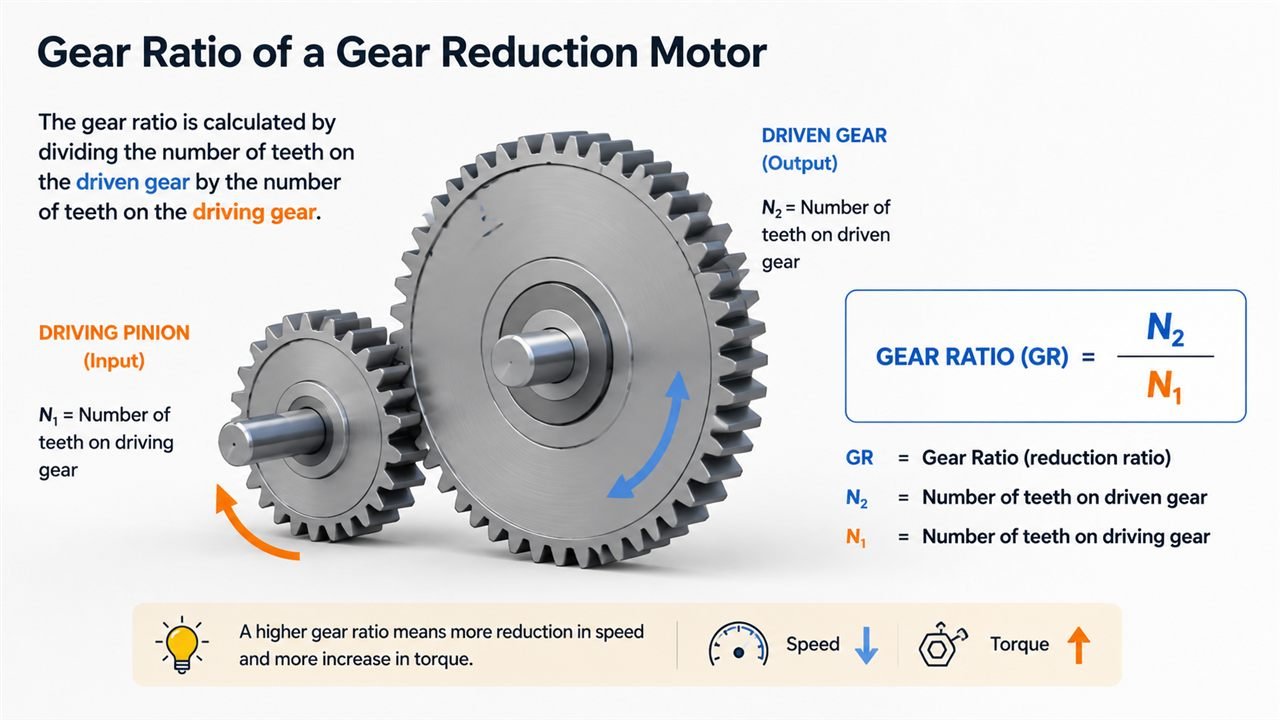
গিয়ার অনুপাত নির্ণয়ের সবচেয়ে সরাসরি উপায় হল একে অপরের সাথে যুক্ত দুটি গিয়ারের দাঁতের সংখ্যা গণনা করা। সূত্রটি হলো:
গিয়ার অনুপাত = চালিত গিয়ারের দাঁতের সংখ্যা ÷ চালক গিয়ারের দাঁতের সংখ্যাবিভাজন করার আগে, কোন গিয়ার কোনটি তা স্পষ্ট করুন:
কারণ রিডাকশন মোটর গতি ধীর করার জন্য তৈরি, ড্রাইভেন গিয়ারে সাধারণত ড্রাইভিং গিয়ারের চেয়ে বেশি দাঁত থাকে, তাই অনুপাত 1:1-এর বেশি হয়। 1:1-এর বেশি অনুপাত রিডাকশন নির্দেশ করে; 1:1-এর কম অনুপাত ওভারড্রাইভ নির্দেশ করে, যা গিয়ার মোটরগুলোতে বিরল।.
কাজ করা উদাহরণ. ধরা যাক মোটর শ্যাফটে থাকা ১৩-দাঁতের পিনিয়ন আউটপুট শ্যাফটে থাকা ৬৫-দাঁতের গিয়ারকে ঘুরায়। গিয়ার অনুপাত:
৬৫ ÷ ১৩ = ৫হ্রাস অনুপাত ৫:১। আউটপুট শ্যাফটের প্রতিটি এক ঘূর্ণনের জন্য মোটর পাঁচবার ঘোরে, তাই ১,৫০০ আরপিএম মোটর আউটপুটে প্রায় ৩০০ আরপিএম উৎপন্ন করে।.
যখন গিয়ারগুলো একই মডিউল বা পিচ ব্যবহার করে, তখন দাঁতের সংখ্যা ব্যবহারের পরিবর্তে পিচ ব্যাসার্ধ ব্যবহার করা যায়। স্ট্যান্ডার্ড গিয়ারে দাঁতের সংখ্যা পিচ ব্যাসার্ধের অনুপাতিক হওয়ায়, উভয় ক্ষেত্রেই অনুপাত একই থাকে। তবে ব্যবহারিক ক্ষেত্রে দাঁত গণনা করাই এখনও সবচেয়ে নির্ভরযোগ্য পদ্ধতি।.
কখনও কখনও আপনি গিয়ারবক্স খুলে দাঁতগুলো গণনা করতে পারেন না, অথবা আপনি ইতিমধ্যেই যে গতিগুলোর সাথে কাজ করছেন সেগুলো জানেন। সেই ক্ষেত্রে ইনপুট এবং আউটপুট গতির ভিত্তিতে অনুপাতটি হিসাব করুন:
গিয়ার অনুপাত = মোটর ইনপুট গতি (আরপিএম) ÷ প্রয়োজনীয় আউটপুট গতি (আরপিএম)কাজ করা উদাহরণ. আপনার মোটর ১,৫০০ আরপিএম-এ চলে এবং কনভেয়রকে ৩০০ আরপিএম-এ চলতে হবে। প্রয়োজনীয় অনুপাত হল:
১,৫০০ ÷ ৩০০ = ৫এই অ্যাপ্লিকেশনের জন্য ৫:১ অনুপাতে হ্রাস প্রয়োজন। এরপর আপনি পরীক্ষা করতে পারেন যে একটি স্ট্যান্ডার্ড গিয়ার রিডাকশন মোটর কি ঘনিষ্ঠ অনুপাত প্রদান করে, মনে রাখবেন লোডের অধীনে আউটপুট গতি তাত্ত্বিক মানের তুলনায় সামান্য কম হয়।.
এই গতি পদ্ধতিটি উপকারী কারণ এটি শুরু হয় আপনার জানা দুইটি সংখ্যা থেকে: রেটেড মোটর গতি এবং আপনি যে মেশিন গতি চান। অধিকাংশ গিয়ার মোটর ডেটাশিটে রেটেড মোটর গতি এবং প্রতিটি অনুপাতের আউটপুট গতি তালিকাভুক্ত থাকে, তাই আপনি দ্রুত নিশ্চিত করতে পারেন যে গতি অনুপাত নামপ্লেট অনুপাতের সাথে মিলছে কিনা।.
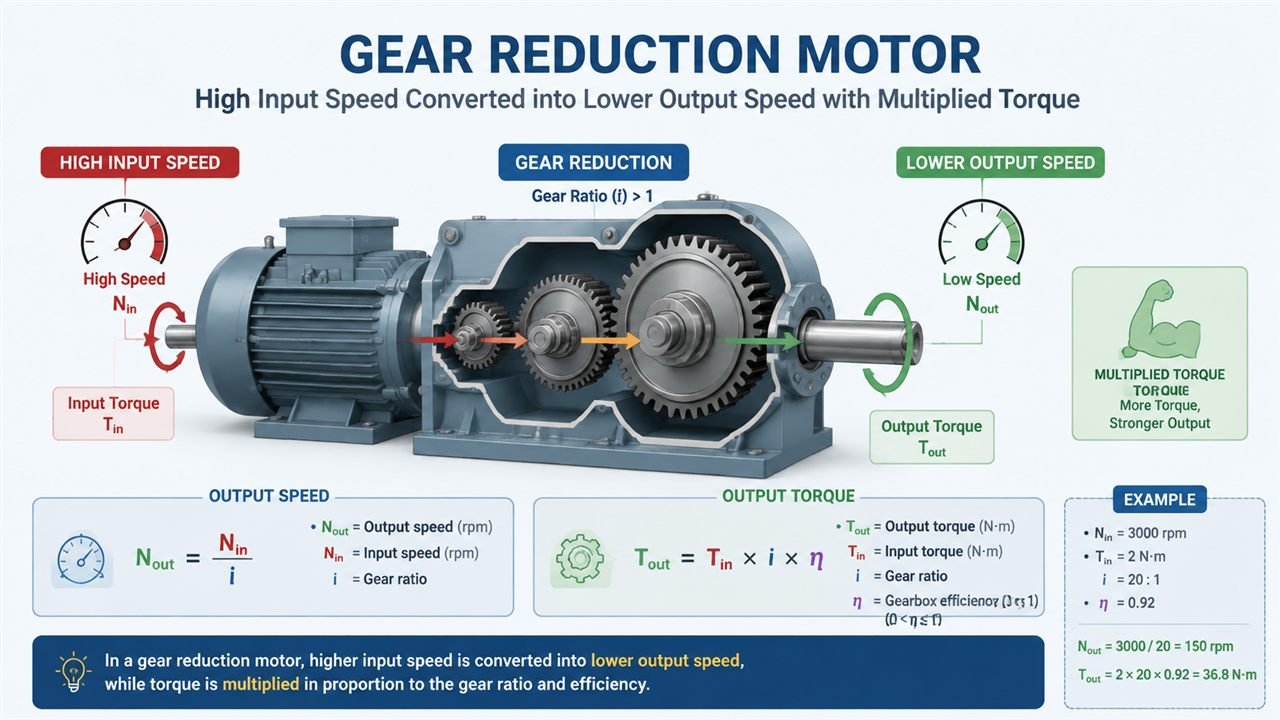
গিয়ার অনুপাত শুধুমাত্র গতির ব্যাপার নয়। এটি বিপরীত দিকে টর্ককেও গুণ করে। দুটি সহজ নিয়ম এই প্রভাবকে বর্ণনা করে:
সুতরাং উচ্চ অনুপাত একই মোটর থেকে ধীর কিন্তু শক্তিশালী আউটপুট দেয়, আর নিম্ন অনুপাত দ্রুত কিন্তু দুর্বল আউটপুট দেয়। এজন্য শুধুমাত্র গতি লক্ষ্যমাত্রা পূরণ করতে কোনো অনুপাত বেছে নেওয়া উচিত নয়; আপনাকে নিশ্চিত করতে হবে যে ফলস্বরূপ টর্ক লোডের চাহিদা পূরণ করতে সক্ষম।.
টর্ক গণনায় দক্ষতা গুরুত্বপূর্ণ। ঘর্ষণ, ব্যাকলাশ এবং তাপের কারণে একটি বাস্তব গিয়ারবক্স কখনই 100% দক্ষ হয় না। অধিকাংশ ছোট স্পার এবং হেলিক্যাল গিয়ারবক্স ৯০১TP3T থেকে ৯৮১TP3T এর মধ্যে চলে, অন্যদিকে ওর্ম এবং রাইট-অ্যাঙ্গেল স্টেজগুলো কম, প্রায়শই অনুপাত এবং লুব্রিকেশনের ওপর নির্ভর করে ৫০১TP3T থেকে ৮৫১TP3T পর্যন্ত হয়। সন্দেহে, একটি রক্ষণশীল দক্ষতার মান প্রয়োগ করুন এবং তারপর মোটর সরবরাহকারীর সাথে যাচাই করুন। মোটর এবং গিয়ারবক্স কীভাবে বৈদ্যুতিক ইনপুটকে নিম্ন গতি ও উচ্চ টর্ক আউটপুটে রূপান্তর করে তা দেখতে পড়ুন গিয়ার রিডাক্সার মোটর কীভাবে কাজ করে.
| গিয়ার অনুপাত | ১,৫০০ আরপিএম ইনপুটে আউটপুট গতি | টর্ক গুণক (৯৫১TP3T দক্ষতায়) |
|---|---|---|
| 5:1 | ৩০০ আরপিএম | বাই × ৪.৭৫ |
| 10:1 | ১৫০ আরপিএম | বাই × ৯.৫ |
| 20:1 | ৭৫ আরপিএম | বাই × ১৯ |
| 50:1 | ৩০ আরপিএম | × ৪৭.৫ |
উপরের টর্ক মানগুলো সরলীকৃত গুণক, প্রতিটি মোটরের জন্য গ্যারান্টিযুক্ত মান নয়। সবসময় আপনার লোড (স্টার্টআপ ও পিক লোড সহ) অনুযায়ী নির্দিষ্ট গিয়ার রিডাকশন মোটরের রেটেড আউটপুট টর্ক যাচাই করুন।.
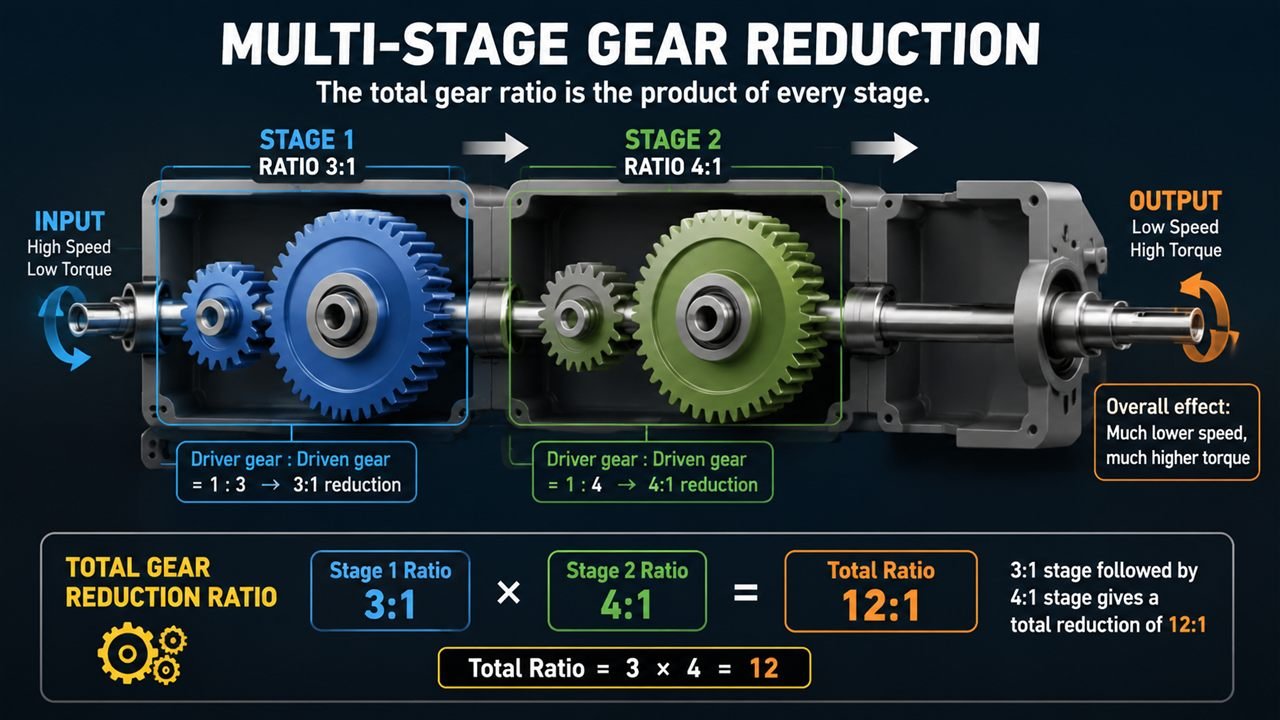
অনেক গিয়ার রিডাকশন মোটর কমপ্যাক্ট হাউজিংয়ে উচ্চ অনুপাত অর্জনের জন্য একের বেশি গিয়ার সেট ব্যবহার করে। একটি বহু-পর্যায়ের গিয়ারবক্সে, প্রতিটি মিলিত গিয়ার যুগল একটি পর্যায়, এবং মোট গিয়ার অনুপাত প্রতিটি পর্যায়ের গুণফল:
মোট অনুপাত = ধাপ ১-এর অনুপাত × ধাপ ২-এর অনুপাত × ধাপ ৩-এর অনুপাত ...কাজ করা উদাহরণ. একটি দুই-পর্যায়ের গিয়ারবক্সের প্রথম পর্যায়ের অনুপাত ৩:১ এবং দ্বিতীয় পর্যায়ের অনুপাত ৪:১। মোট অনুপাত হল:
৩ × ৪ = ১২মোট হ্রাস অনুপাত ১২:১, তাই ১,৪৪০ আরপিএম মোটর আউটপুটে প্রায় ১২০ আরপিএম প্রদান করে। মাল্টি-স্টেজ ডিজাইনই হল সেই উপায় যার মাধ্যমে কম্প্যাক্ট গিয়ারবক্সগুলো ৫০:১, ১০০:১ বা তারও বেশি অনুপাত অর্জন করে, অযথা বড় গিয়ার ছাড়াই। রাইট-অ্যাঙ্গেল গিয়ার রিডাকশন মোটরগুলো প্রায়ই স্পার বা হেলিক্যাল স্টেজকে ওয়ার্ম বা বেভেল স্টেজের সাথে সংযুক্ত করে, এবং একই গুণন নিয়ম প্রযোজ্য হয়।.
গণনা একত্রিত করতে, এখানে একটি সম্পূর্ণ নির্বাচনের উদাহরণ দেওয়া হল।.
এই চার-ধাপের রুটিনটি অধিকাংশ ছোট গিয়ার রিডাকশন মোটর সাইজ করার সময় ব্যবহৃত একই পদ্ধতি: প্রথমে গতি থেকে অনুপাত নির্ধারণ করুন, তারপর টর্ক যাচাই করুন, এরপর একটি স্ট্যান্ডার্ড পণ্য মিলিয়ে নিন। অন্যান্য নির্বাচনী ফ্যাক্টরগুলির আরও বিস্তারিত নির্দেশনার জন্য পড়ুন কিভাবে একটি ছোট গিয়ার রিডাক্সার মোটর নির্বাচন করবেন.
গিয়ার অনুপাতের গণিত সরল, কিন্তু কয়েকটি ত্রুটি বারবার দেখা দেয়:
যদি আপনি নিশ্চিত না হন যে গিয়ারবক্সটি কীভাবে সাজানো হয়েছে বা এতে কতটি ধাপ আছে, তাহলে ছবি বা মডেল নম্বর দেখে অনুমান করার চেয়ে প্রস্তুতকারকের কাছে রিডাকশন নিশ্চিত করাই নিরাপদ।.
৫:১ গিয়ার অনুপাত মানে মোটর বা ইনপুট গিয়ার প্রতি আউটপুট গিয়ারের এক ঘূর্ণনে পাঁচবার ঘোরে। এটি গতি এক-পঞ্চমাংশে কমিয়ে দেয় এবং আদর্শ অবস্থায় দক্ষতার ক্ষয় ঘটার আগে টর্ককে পাঁচগুণ বৃদ্ধি করে।.
হ্যাঁ, গিয়ারবক্স এবং মোটরের সীমা পর্যন্ত। উচ্চ অনুপাত উচ্চ তাত্ত্বিক টর্ক গুণকের সাথে ধীর আউটপুট প্রদান করে। ব্যবহারযোগ্য টর্ক এখনও গিয়ারবক্সের দক্ষতা এবং মোটরের রেটেড টর্কের উপর নির্ভর করে।.
এগুলো একই সম্পর্ককে বর্ণনা করে। রিডাকশন ড্রাইভে গিয়ার অনুপাত 1:1-এর বেশি হয়, তাই এটিকে প্রায়ই রিডাকশন অনুপাত বলা হয়। গিয়ার রিডাকশন মোটর-এ এই দুই শব্দই বিনিময়যোগ্যভাবে ব্যবহৃত হয়।.
প্রতিটি ধাপের অনুপাত একসঙ্গে গুণ করুন। উদাহরণস্বরূপ, ৩:১ অনুপাতের পর ৪:১ অনুপাত প্রয়োগ করলে মোট অনুপাত হয় ১২:১।.
স্মল এসি গিয়ার রিডুসার মোটরগুলো সাধারণত ৩:১, ৫:১, 10:1, 15:1, 20:1, 30:1, 50:1, 100:1 এবং উচ্চতর, মোটর পরিবার এবং গিয়ার স্টেজের সংখ্যার উপর নির্ভর করে। সঠিক অনুপাতের তালিকা পণ্য ডেটাশিটে নিশ্চিত করুন।.
অনুপাত গণনায় রেটেড মোটর গতি ব্যবহার করা হয়। লোডের অধীনে মোটর গতি সামান্য কমে যায়, তাই পরিমাপকৃত আউটপুট গতি তাত্ত্বিক মানের চেয়ে কিছুটা কম হয়। এটি প্রত্যাশিত এবং সাধারণত অ্যাপ্লিকেশনে এর জন্য ব্যবস্থা নেওয়া হয়।.
গিয়ার রিডাকশন মোটরের গিয়ার অনুপাত একটি বিভাজন: চালিত গিয়ার দাঁতের সংখ্যা ভাগ চালক গিয়ার দাঁতের সংখ্যা, বা ইনপুট গতি ভাগ আউটপুট গতি। মাল্টি-স্টেজ গিয়ারবক্সের ক্ষেত্রে স্টেজ অনুপাতগুলো গুণ করুন, এবং সবসময় মনে রাখবেন যে প্রকৃত আউটপুট টর্ক হল আদর্শ টর্ক যা গিয়ারবক্সের দক্ষতা দ্বারা হ্রাসপ্রাপ্ত।.
একবার আপনি প্রয়োজনীয় অনুপাত জানতে পারলে, পরবর্তী ধাপ হল আপনার লোডের জন্য পর্যাপ্ত টর্কযুক্ত একটি মোটর খুঁজে বের করা। ব্রাউজ করুন ছোট এসি গিয়ার রিডাক্সার মোটর অথবা সম্পূর্ণ পণ্যের পরিসর উপলব্ধ অনুপাত এবং আউটপুট গতি দেখতে, অথবা টেনচুয়ান দলের সাথে যোগাযোগ করুন আপনার গতি এবং টর্ক সংক্রান্ত তথ্য দিয়ে আপনার প্রয়োগের জন্য একটি সুপারিশ পান।.