Cách chọn động cơ giảm tốc phù hợp cho máy đóng gói
Ngày đăng: Tác giả: Lisa
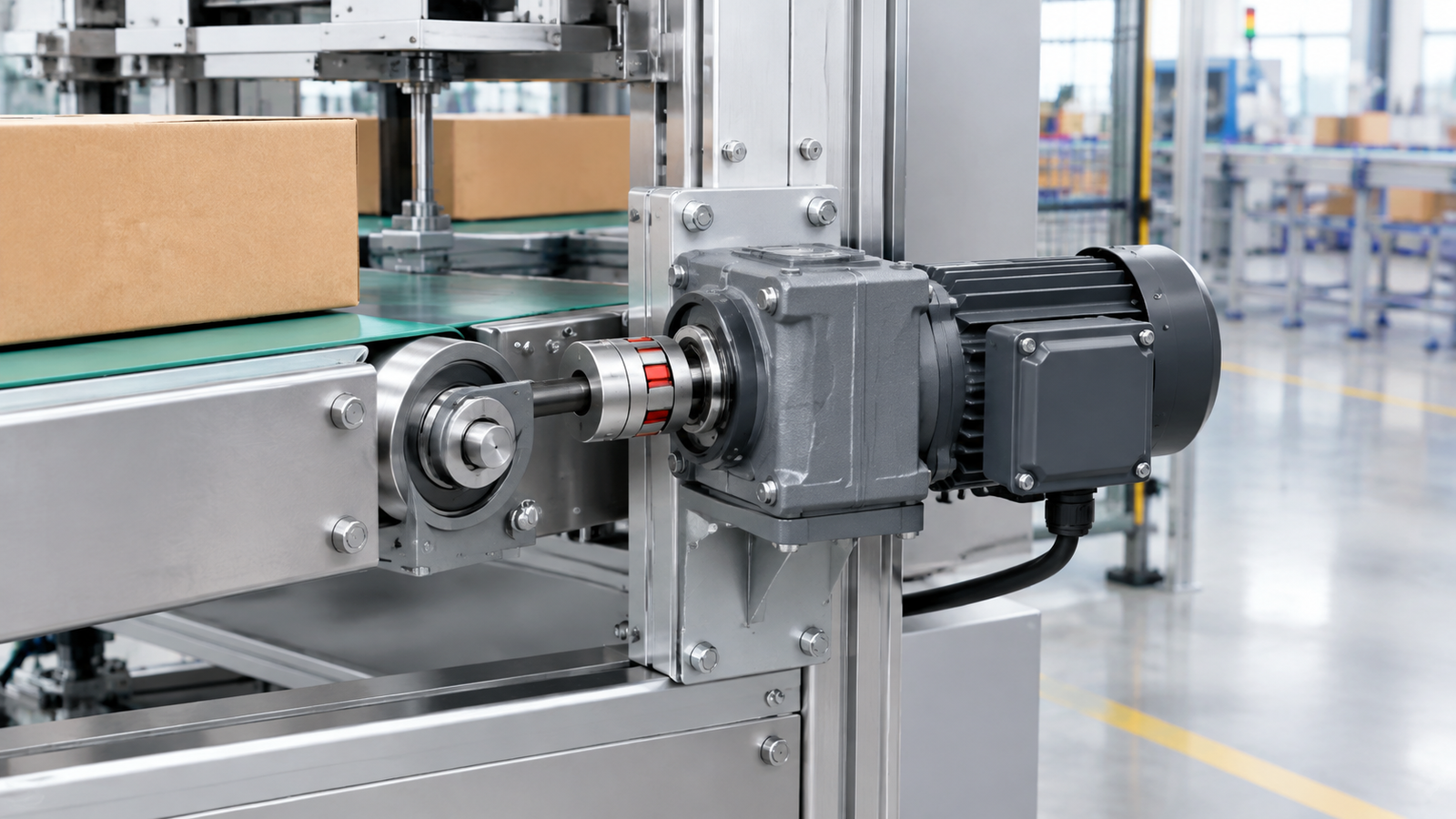
Nếu bạn sản xuất hoặc bảo trì máy đóng gói, loại động cơ bánh răng mà bạn lựa chọn sẽ quyết định dây chuyền sản xuất của bạn có vận hành trơn tru hay phải dừng lại vì những lý do có thể tránh được. A động cơ bánh răng cho máy đóng gói phải đảm bảo tốc độ đầu ra ổn định, cung cấp mô-men xoắn đủ cho sản phẩm được vận chuyển, chịu được các chu kỳ khởi động-dừng lặp đi lặp lại và lắp vừa khung máy trong điều kiện không gian hạn chế. Hướng dẫn này trình bày các quyết định về lựa chọn kích thước theo thứ tự cần thực hiện: xác định vị trí trạm truyền động, xác định tốc độ đầu ra và tỷ số truyền, ước tính mô-men xoắn, lựa chọn công suất động cơ và kích thước khung máy phù hợp, cũng như kiểm tra chu kỳ làm việc, điện áp và điều kiện môi trường.
Thực chất động cơ bánh răng của máy đóng gói có chức năng gì?
Một dây chuyền đóng gói không chỉ gồm một động cơ — mà là một chuỗi các bộ truyền động nhỏ, mỗi bộ điều khiển một trạm khác nhau. Băng tải vận chuyển các thùng carton giữa các công đoạn, máy dán nhãn đưa sản phẩm qua đầu in, bộ hàn miệng đóng túi hoặc màng bọc, bộ đếm phân loại các bộ phận vào từng làn, và máy dựng thùng carton gấp các tấm giấy thành hình dạng hoàn chỉnh. Mỗi trạm đều có cùng một bộ yêu cầu:
Tốc độ đầu ra thấp và ổn định. Hầu hết các trạm hoạt động ở tốc độ thấp hơn nhiều so với tốc độ động cơ, thường chỉ ở mức vài chục vòng/phút, để sản phẩm không bị xê dịch, va chạm hoặc bị nạp sai.
Hành vi khởi động-dừng lặp lại. Các trạm lập chỉ mục hoạt động hàng trăm lần mỗi giờ và gây áp lực lên các ổ đĩa không được thiết kế với biên độ mô-men xoắn dự phòng.
Thiết kế nhỏ gọn, tiết kiệm không gian. Không gian bên trong khung máy đóng gói rất đắt đỏ, và đầu ra góc vuông thường phù hợp với những vị trí mà động cơ lắp thẳng hàng không thể lắp đặt được.
Khoảng thời gian bảo dưỡng dài. Thời gian ngừng hoạt động đồng nghĩa với việc mất sản phẩm, do đó các nhà sản xuất thiết bị gốc (OEM) ưa chuộng các thiết bị kín, ít cần bảo trì.
Chính những nhu cầu này là lý do để các động cơ giảm tốc AC góc vuông cỡ nhỏ được chế tạo ra. Tuy nhiên, trước khi xem các danh mục sản phẩm, hãy xác định rõ đặc điểm của trạm đó.
Bước 1: Xác định tốc độ đầu ra và tỷ số truyền
Tốc độ đầu ra là con số bạn cần xác định trước tiên, vì nó phụ thuộc vào tốc độ dây chuyền yêu cầu của máy. Một băng tải vận chuyển các hộp đến trạm niêm phong có thể cần tốc độ 20–60 vòng/phút tại trục truyền động; một bánh xe chỉ thị có thể cần tốc độ 10–30 vòng/phút; một tháp chiết rót nhỏ có thể chạy ở tốc độ 100 vòng/phút hoặc cao hơn. Khi tốc độ đầu ra mục tiêu đã được thiết lập, tỷ số truyền rất dễ tính:
Tỷ số truyền cần thiết = tốc độ định mức của động cơ ÷ tốc độ đầu ra cần thiết
Một động cơ cảm ứng hoạt động ở tốc độ khoảng 1300–1550 vòng/phút khi mang tải, kết hợp với hộp giảm tốc tỷ số 25:1, sẽ cho tốc độ đầu ra trong khoảng 50–60 vòng/phút. Động cơ Hướng dẫn tính tỷ số truyền giải thích chi tiết về vấn đề này, bao gồm cả cách tính toán độ trượt và tải trọng. Trên các đơn vị góc vuông có khung 90 mm như dòng 5GU, tỷ số truyền tiêu chuẩn dao động từ 3:1 đến 500:1, bao phủ dải tốc độ đầu ra từ khoảng 500 vòng/phút xuống còn 3 vòng/phút — đủ để đáp ứng hầu hết các trạm trên một dây chuyền đóng gói tiêu chuẩn.
Bước 2: Ước tính mô-men xoắn mà ứng dụng thực sự cần
Mô-men xoắn là yếu tố thường bị đánh giá thấp nhất. Động cơ không chỉ phải duy trì chuyển động mà còn phải vượt qua tải trọng khi khởi động, trong khi các trạm đóng gói liên tục khởi động và dừng lại. Hãy xây dựng ước tính mô-men xoắn dựa trên cơ chế hoạt động thực tế của trạm:
Trọng lượng sản phẩm và khối lượng đai/con lăn — mọi thứ đều được chiếc xe đẩy này tăng tốc.
Ma sát — ma sát dây đai, ổ lăn, thanh dẫn hướng, độ căng màng.
Góc dốc — bất kỳ độ dốc nào cũng làm tăng thành phần tải do trọng lực gây ra.
Tần suất khởi động-dừng. Các trạm phân loại cần khoảng trống rộng hơn so với các băng tải liên tục.
Hệ số an toàn. Một quy tắc thực tế là 1,5–2 lần mô-men xoắn chạy tính toán cho chế độ khởi động-dừng.
Ví dụ minh họa: Một băng tải thùng carton nhỏ với tổng tải trọng di chuyển là 20 kg và hệ số ma sát vừa phải thường chỉ cần mô-men xoắn dưới 5 N·m tại trục ra. Xem bảng tải trọng giảm tốc của động cơ bánh răng góc vuông 5GU 40–140 W, ngay cả khung động cơ 40 W với tỷ số giảm tốc 3:1 cũng có công suất định mức là 0,72 N·m, và ở các tỷ số cao hơn, cùng một khung động cơ này có thể chịu tải lớn hơn nhiều qua hộp số — khung 60 W có thể chịu tải lên đến 19,6 N·m ở các tỷ số truyền định mức cao nhất. Hộp số làm tăng mô-men xoắn, do đó luôn so sánh giảm tải đầu ra cho phép so với mô-men xoắn yêu cầu của bạn, chứ không phải thông số định mức danh nghĩa của động cơ.
Bước 3: Điều chỉnh công suất động cơ và kích thước khung sao cho phù hợp với trạm
Công suất động cơ và kích thước khung quyết định khả năng xử lý tải nhiệt liên tục của hệ thống truyền động. Các nhà sản xuất thiết bị đóng gói (OEM) không cần một động cơ quá lớn để đáp ứng mọi nhu cầu — họ cần khung động cơ nhỏ nhất có thể đảm bảo hoạt động đáng tin cậy cho một loại trạm cụ thể. Trên các thiết bị đóng gói có công suất từ nhỏ đến trung bình, các dải công suất được phân loại đại khái như sau:
Trạm máy
Tốc độ đầu ra thông thường
Tải ký tự
Dải công suất động cơ điển hình
Băng tải mini, cảm biến, bộ cấp liệu nhỏ
20–200 vòng/phút
Nhẹ, không liên tục
15–40 W
Dán nhãn, niêm phong, đóng gói vào túi, băng tải nhỏ
10–100 vòng/phút
Trung bình nhẹ, khởi động-dừng
40–90 W
Máy dựng thùng carton, băng tải cỡ trung, máy đóng gói
5–60 vòng/phút
Đạp xe với cường độ trung bình, thường xuyên
90–300 W
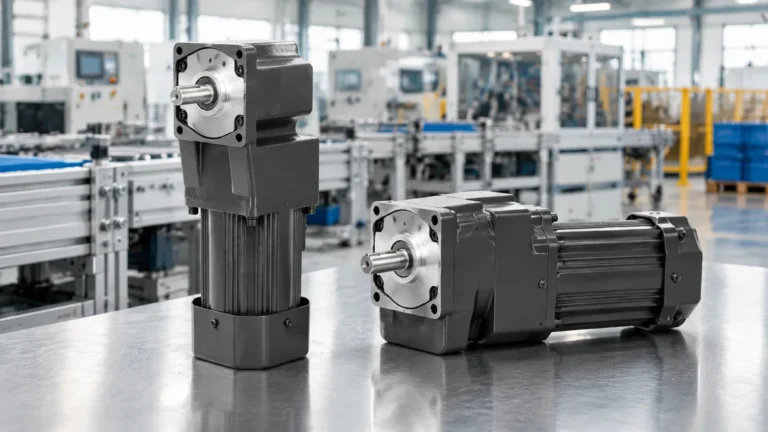
Đối với dải giữa — loại phổ biến nhất trên các máy đóng gói — thì Động cơ giảm tốc bánh răng góc vuông 5GU (40–140 W) là lựa chọn chủ lực: khung 90 mm, góc đầu ra 90°, mô-men xoắn định mức khoảng 246–670 mN·m ở tốc độ 1300–1550 vòng/phút, và các biến thể có khả năng đảo chiều với thời gian làm việc 30 phút dành cho chuyển động định vị. Trong trường hợp không gian cực kỳ hạn chế và tải trọng nhẹ, Động cơ bánh răng góc vuông 4GN 25 W bao gồm các hệ thống truyền động phụ như bộ chuyển hướng và các máy cấp liệu nhỏ. Ở phân khúc thiết bị hạng nặng, Bộ chuyển đổi góc vuông 6GU công suất 120–300 W phù hợp với các băng tải cỡ lớn, máy đóng gói và bộ tích lũy nhiều hàng cần mô-men xoắn ổn định trong thời gian dài.
Bước 4: Dòng điện xoay chiều (AC) hay dòng điện một chiều (DC) — và loại bánh răng nào
Có hai yếu tố thiết kế quan trọng đối với máy đóng gói: công nghệ động cơ và cấu trúc bánh răng. Động cơ cảm ứng một pha hoặc ba pha kết hợp bánh răng chiếm ưu thế trong thiết bị đóng gói nhờ giá thành rẻ, độ bền cao và không cần bộ điều khiển tốc độ cho các trạm hoạt động ở tốc độ cố định. Nếu máy đã sử dụng bộ biến tần để điều chỉnh tốc độ, động cơ giảm tốc AC ba pha sẽ mang lại độ linh hoạt về tốc độ cao nhất. Động cơ giảm tốc DC vẫn phù hợp với các thiết bị đóng gói di động chạy bằng pin hoặc điện áp thấp, nhưng đối với máy móc trong dây chuyền sản xuất, động cơ AC thường là giải pháp đơn giản và bền bỉ hơn. Các So sánh giữa động cơ DC có hộp số và động cơ AC có hộp số trình bày chi tiết các sự đánh đổi.
Về mặt hình học bánh răng, đầu ra góc vuông (90°) là lựa chọn thiết kế phổ biến nhất vì động cơ được đặt bên cạnh hoặc phía trên trục truyền động thay vì nằm trên cùng một đường thẳng với trục này, giúp tiết kiệm không gian khung máy. Các bộ truyền động góc vuông cũng mang lại tỷ số giảm tốc cao trong một giai đoạn truyền động nhỏ gọn, và chính vì lý do này mà các trạm băng tải và trạm hàn — yêu cầu tốc độ thấp và mô-men xoắn cao trong không gian hạn chế — thường xuyên sử dụng chúng.
Bước 5: Kiểm tra chu kỳ làm việc, điện áp và điều kiện môi trường
Trước khi quyết định chọn một mã sản phẩm, hãy xác nhận xem các điều kiện vận hành có phù hợp với thông số kỹ thuật của động cơ hay không:
Chu kỳ làm việc. Động cơ hoạt động liên tục chạy suốt ca làm việc; các biến thể có chế độ hoạt động 30 phút có thể đảo chiều được thiết kế để thực hiện các chu kỳ định vị gián đoạn và phải được để nguội. Cần điều chỉnh mức định mức hoạt động sao cho phù hợp với chu kỳ hoạt động của trạm.
Điện áp và tần số. Một động cơ có thông số kỹ thuật định mức 110 V hoặc 220 V, 50 Hz sẽ chạy ở tốc độ khác khi hoạt động ở tần số 60 Hz. Xác nhận nguồn điện tại thị trường của quý khách — Các sản phẩm động cơ góc vuông Tenchuan có sẵn ở các cấu hình một pha 110/220 V và ba pha 220 V, 50 Hz.
Môi trường. Các vỏ bọc công nghiệp tiêu chuẩn phù hợp với các khu vực đóng gói thông thường có mức độ bụi vừa phải. Nếu trạm làm việc nằm gần khu vực phải rửa sạch, tiếp xúc với sản phẩm dính hoặc có độ ẩm cao, hãy hỏi về mức độ bảo vệ của động cơ và liệu có cần xử lý bề mặt hoặc lớp phủ khác hay không.
Bộ phận gắn và trục. Hãy kiểm tra đường kính trục ra, rãnh chốt và mặt bích lắp đặt để đảm bảo chúng phù hợp với hình dạng hiện có của máy. Các bộ phận góc vuông có thể lắp đặt theo chiều ngang hoặc chiều dọc, do đó hãy xác định vị trí lắp đặt theo yêu cầu của khung máy.
Đối với các trạm đóng gói thực phẩm hoặc đồ uống mà bộ truyền động được đặt gần khu vực sản phẩm, các lưu ý về vị trí đảm bảo vệ sinh trong Hướng dẫn lựa chọn động cơ bánh răng đạt tiêu chuẩn thực phẩm nên đọc trước khi hoàn thiện bản yêu cầu kỹ thuật.
Danh sách kiểm tra lựa chọn
Câu hỏi cần trả lời
Tại sao điều này lại quan trọng
Trạm được dẫn động là gì và chu kỳ hoạt động của nó ra sao?
Xác định mức tải định mức và liệu bạn có cần chế độ hoạt động liên tục hay chế độ hoạt động đảo chiều trong 30 phút hay không
Trạm này cần tốc độ đầu ra (vòng/phút) là bao nhiêu?
Cài đặt tỷ số truyền: tốc độ động cơ ÷ tốc độ đầu ra yêu cầu
Tải cần mô-men xoắn bao nhiêu khi khởi động?
Đặt dải công suất động cơ và mức tải đầu ra giảm cần thiết
Thị trường của quý vị sử dụng điện áp và tần số nào?
Điện một pha 110/220 V so với điện ba pha 220 V, 50/60 Hz
Cấu trúc lắp đặt này có đủ nhỏ gọn để đảm bảo góc thoát 90° không?
Khung góc vuông giúp tiết kiệm không gian; hãy kiểm tra kích thước trục và mặt bích
Môi trường xung quanh là gì?
Bụi, độ ẩm và việc rửa trôi quyết định nhu cầu về vỏ bọc và mức độ bảo vệ
Kết luận
Việc lựa chọn động cơ bánh răng cho máy đóng gói phụ thuộc vào năm quyết định được thực hiện theo thứ tự sau: xác định trạm làm việc và tốc độ đầu ra của nó, tính toán tỷ số truyền, ước tính mô-men xoắn khởi động kèm biên độ an toàn, lựa chọn dải công suất và kích thước khung động cơ phù hợp, đồng thời xác minh chế độ làm việc, điện áp và điều kiện môi trường. Đối với các trạm có mức tải nhỏ đến trung bình – chiếm phần lớn trong các dây chuyền đóng gói – một động cơ giảm tốc AC góc vuông nhỏ gọn trong dải công suất 25–300 W có thể đáp ứng phần lớn các ứng dụng. Hãy tham khảo danh mục động cơ giảm tốc góc vuông tại Tenchuan để so sánh các tùy chọn 4GN, 5GU và 6GU song song với các bảng tải đã công bố — và nếu quý khách cung cấp thông tin về tốc độ, mô-men xoắn và điện áp của trạm, kỹ sư của Tenchuan có thể hỗ trợ xác định mã sản phẩm trước khi quý khách đặt hàng.
Câu hỏi thường gặp
Làm thế nào để tính tỷ số truyền của động cơ bánh răng cho máy đóng gói?
Chia tốc độ định mức của động cơ cho tốc độ đầu ra yêu cầu. Một động cơ chạy ở tốc độ khoảng 1400 vòng/phút với hộp giảm tốc tỷ số 25:1 sẽ cho tốc độ khoảng 56 vòng/phút tại trục đầu ra. Hãy bắt đầu từ tốc độ đầu ra yêu cầu của trạm, sau đó chọn tỷ số tiêu chuẩn gần nhất.
Tôi cần động cơ bánh răng cỡ nào cho băng tải đóng gói?
Đối với tải trọng sản phẩm từ nhẹ đến trung bình trên các băng tải thông thường, dải công suất động cơ 40–90 W thường là đủ; đối với các dây chuyền có tải trọng nặng hơn hoặc hoạt động khởi động–dừng thường xuyên, công suất cần tăng lên dải 90–300 W. Việc lựa chọn công suất phụ thuộc vào trọng lượng sản phẩm, độ ma sát, độ dốc và tần suất khởi động–dừng, chứ không chỉ dựa vào chiều dài của băng tải.
Nên dùng động cơ giảm tốc AC hay DC cho máy đóng gói?
Đối với các trạm trên đường dây có tốc độ cố định, động cơ giảm tốc xoay chiều một pha hoặc ba pha là lựa chọn tiêu chuẩn — bền bỉ, chi phí thấp và không cần bảo trì. Nên chọn động cơ xoay chiều ba pha khi bạn đã sử dụng bộ biến tần, và dành động cơ một chiều cho các thiết bị di động chạy bằng pin hoặc thiết bị điện áp thấp.
Động cơ bánh răng góc vuông có thể xử lý được các chu kỳ khởi động-dừng lặp đi lặp lại trong quá trình định vị không?
Đúng vậy, khi được thiết kế với biên độ mô-men xoắn. Các biến thể có chế độ làm việc 30 phút và có thể đảo chiều được thiết kế cho chu kỳ hoạt động gián đoạn, nhưng bạn phải tuân thủ giới hạn công suất định mức và đảm bảo thời gian làm mát giữa các khoảng thời gian hoạt động. Các thiết bị hoạt động liên tục là lựa chọn phù hợp cho các trạm hoạt động suốt ca làm việc.
Tại sao nên chọn động cơ bánh răng góc vuông thay vì động cơ bánh răng thẳng trên thiết bị đóng gói?
Cấu trúc đầu ra góc vuông (90°) cho phép động cơ được lắp đặt vuông góc với trục truyền động, giúp tiết kiệm không gian khung máy bên trong và mang lại hệ thống giảm tốc một cấp nhỏ gọn — sự kết hợp mà hầu hết các trạm băng tải, hàn kín và dán nhãn đều cần.
Một động cơ bánh răng góc vuông cỡ nhỏ có thể chạy với tốc độ tối đa bao nhiêu tại đầu ra?
Với các tỷ số tiêu chuẩn từ 3:1 đến 500:1 trên khung 90 mm, tốc độ đầu ra dao động từ khoảng 500 vòng/phút xuống còn khoảng 3 vòng/phút, do đó một khung có thể đáp ứng mọi nhu cầu, từ các tháp nạp nhanh đến các bánh răng chia độ rất chậm.
So sánh động cơ bánh răng góc vuông và động cơ bánh răng thẳng dựa trên bảng tải trọng cho phép thực tế: hiệu suất, mô-men xoắn, “lầm tưởng về khả năng tự khóa” và cách đưa ra quyết định qua năm bước.
Hướng dẫn lắp đặt động cơ bánh răng 750W (khoảng 1 HP): những điểm khác biệt giữa lắp đặt theo phương thẳng đứng và phương ngang, mức dầu, bảo vệ phớt, tải trọng dọc trục và mô-men xoắn theo tỷ số truyền.
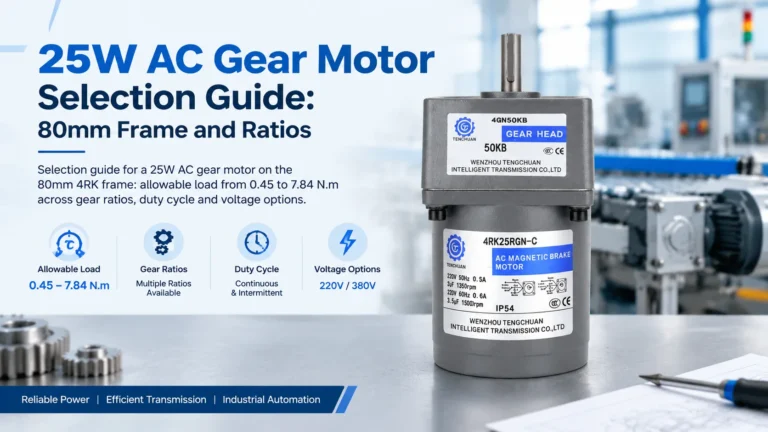
Cách lựa chọn công suất cho động cơ giảm tốc AC 25W trên khung 4RK 80 mm: tốc độ đầu ra, tải cho phép từ 0,45 đến 7,84 N·m, mô-men xoắn tối đa, chu kỳ làm việc và các lựa chọn điện áp.