A Small AC gear motor is a compact drive unit that combines an electric motor with a gearbox. The motor creates rotation, while the gearbox reduces that speed and increases usable torque at the output shaft. This pairing lets a relatively small motor move conveyors, packaging equipment, gates, mixers, and other loads that need controlled low-speed motion. This guide explains how gear motors work, the main types, their advantages, how to size one, and what affects purchasing cost.
What Is a Gear Motor?
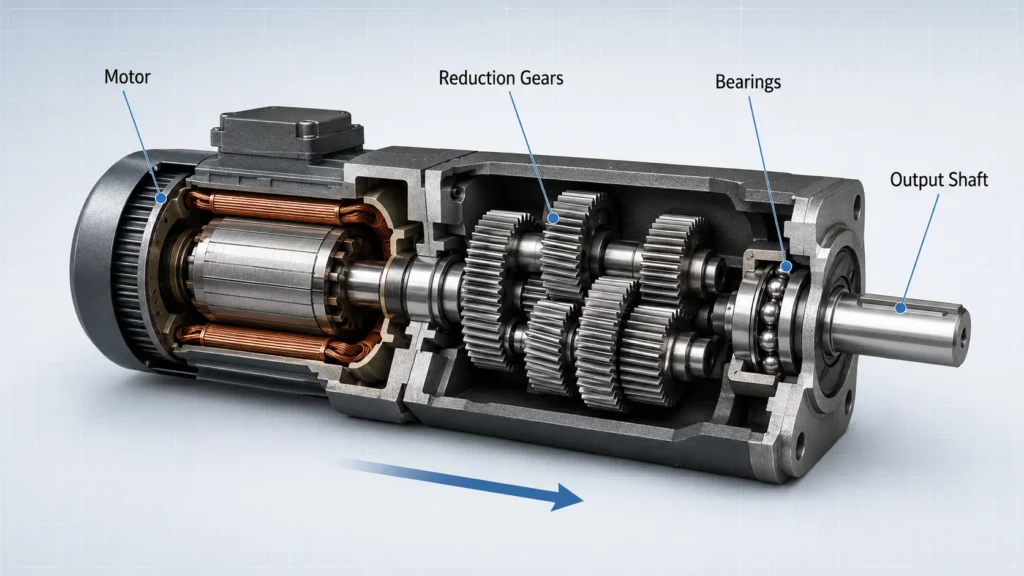
A geared drive—also written as gearmotor or geared motor—is an electric motor and reduction gearbox designed to operate as one drive system. A standard electric motor usually turns faster than the driven machine needs. The gearbox converts that high-speed, lower-torque rotation into slower rotation with more torque.
The basic relationships are:
Gear ratio = input speed ÷ output speed
Ideal output speed = motor speed ÷ gear ratio
Estimated output torque = motor torque × gear ratio × gearbox efficiency
For example, if a motor turns at 1,500 rpm and drives a 30:1 reducer, the theoretical output speed is about 50 rpm. Output torque rises in proportion to the ratio, but friction and other losses mean the real increase is lower than the ideal value. Always use the manufacturer’s rated output torque rather than relying only on a simple calculation.
How Does a Gear Motor Work?
Electric power produces a rotating magnetic field inside the motor. This turns the rotor and input shaft. The input shaft drives one or more gear stages, and each stage changes the relationship between rotational speed and torque. Bearings support the shafts, lubricant limits wear and heat, and the housing keeps the components aligned.
A higher reduction ratio generally produces lower output speed and higher output torque. However, ratio alone does not determine whether a unit will work reliably. Gear efficiency, duty cycle, starting load, shock load, thermal limits, radial and axial shaft loads, and the mounting arrangement all matter. A brake, speed controller, or inverter may also be required depending on the application.
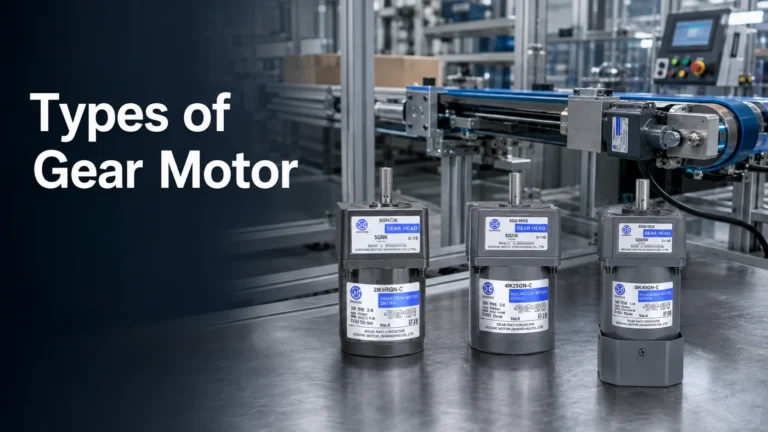
Main Types of Gear Motors
Type
Typical strengths
Common uses
Spur gear motor
Simple construction, economical, compact
Small conveyors, vending equipment, light automation
Helical gear motor
Smooth tooth engagement, good efficiency, quieter operation
Continuous-duty conveyors and production machinery
High torque density, compact coaxial design, low backlash options
Robotics, servo systems, mobile equipment
Bevel or hypoid gear motor
Efficient right-angle power transmission
Packaging lines, conveyors, material handling
These drives are also classified by motor technology. AC induction units are common in fixed-speed industrial equipment, while DC and brushless DC models are often chosen for battery power or variable-speed control. The shaft can be parallel, inline, or right-angle, so the machine layout often narrows the choice before detailed sizing begins.
Why Use a Gear Motor Instead of a Motor Alone?
More usable torque: reduction helps a modest motor start and move a heavier load.
Lower output speed: the gearbox brings motor speed into the range needed by the machine.
Compact installation: an integrated unit can require less space than a large direct-drive motor.
Simpler assembly: matched motor and gearbox interfaces reduce coupling and alignment work.
Repeatable motion: a correctly selected drive provides stable speed for conveyors, feeders, and indexing mechanisms.
These benefits explain why geared drives appear in food equipment, automated doors, agricultural machinery, printing systems, medical equipment, material handling, and factory automation. Buyers comparing compact industrial options can review Tenchuan’s small AC gear reducer motors to see how power, frame size, voltage, and ratio choices vary across a product family.
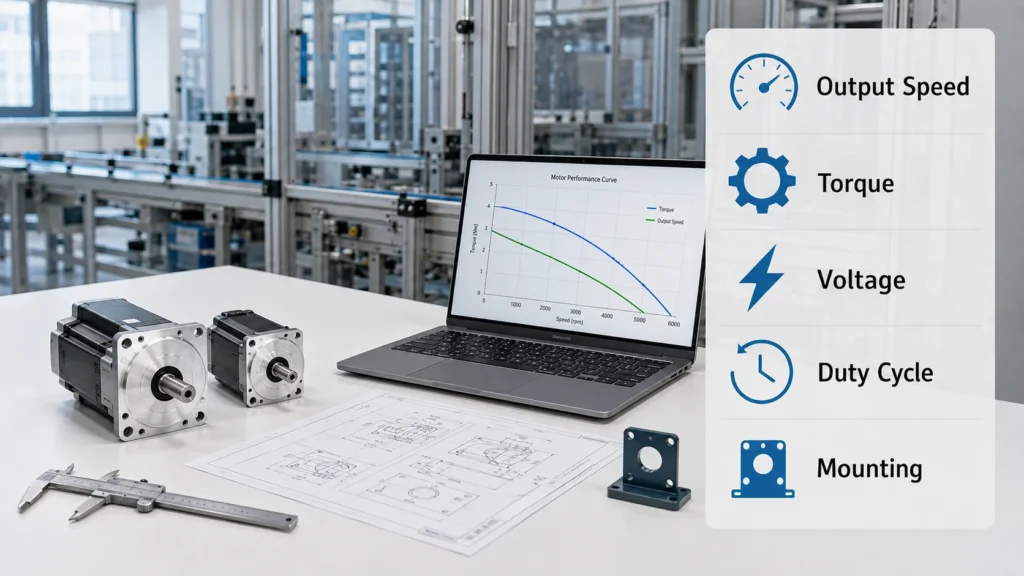
How to Choose the Right Gear Motor
1. Define the Required Output Speed
Start with the speed needed at the driven shaft, pulley, wheel, or screw. Divide the motor’s rated speed by the target output speed to estimate the required reduction ratio. Confirm the actual rated output speed in the supplier’s data because motor slip and gearbox construction affect the result.
2. Calculate Continuous and Peak Torque
Determine the torque required to run the load and the higher torque needed during starting, acceleration, reversing, or a jam. Apply a suitable service factor for operating hours, starts per hour, load variation, and shock. Select from published rated values rather than selecting a motor only by wattage.
3. Match Power Supply and Control
Specify voltage, frequency, phase, and allowable current. Decide whether the application needs one direction, reversible operation, adjustable speed, a brake, or position feedback. When using a variable-frequency drive with an AC motor, check the permitted speed range and cooling at low speed.
4. Check Mechanical Fit
Verify shaft diameter and orientation, mounting face, bolt pattern, available envelope, and cable direction. Also check allowable overhung and thrust loads, especially when a pulley, sprocket, or helical mechanism loads the output shaft.
5. Account for the Environment and Duty Cycle
Temperature, dust, water, washdown chemicals, altitude, noise limits, and indoor or outdoor operation can change the required enclosure and lubricant. Continuous operation needs careful thermal verification; intermittent duty still requires adequate starting and peak-torque capacity.
Small AC Gear Motor Examples by Power
Power rating is only one selection input, but it provides a practical starting point when comparing similar AC models. Compact equipment may use a 25W small AC gear reducer motor, while light conveyors and packaging mechanisms may require a 40W small AC gear reducer motor. Larger loads can move the selection toward a 90W model or a 160W model. The correct choice still depends on the final ratio, rated output torque, duty, mounting, and power supply.
What Determines Gear Motor Cost?
Gear motor cost depends on motor power, gearbox type, ratio, torque rating, materials, machining accuracy, efficiency, sealing, brake or controller options, certification, and order quantity. A cheap gear motor may be suitable for a light intermittent load, but the lowest purchase price can become expensive if the unit is undersized, noisy, difficult to replace, or unable to survive the duty cycle.
A public gear motor price list may help with early budgeting, but configured industrial units often require a quotation. To receive a useful comparison, send each supplier the same specification: required output rpm, continuous and peak torque, voltage and frequency, duty cycle, mounting, shaft load, environment, annual quantity, and optional features. This prevents a misleading comparison between units with different ratings or accessories.
Buying Wholesale or Ordering an OEM Gear Motor
For gear motor wholesale orders, look beyond unit price. Ask about sample approval, minimum order quantity, lead time, inspection records, spare-unit availability, packaging, and consistency between production batches. A capable gear motor company should be able to explain its rating data and trace the selected model to your application requirements.
A gear motor OEM project may involve custom voltage, winding, lead wire, connector, shaft dimensions, mounting, terminal-box direction, branding, or packaging. Freeze the approved drawing and performance specification before volume production. Tenchuan describes its manufacturing background on About Tenchuan, while its broader range is available through the Products page.
Local Supplier or Overseas Manufacturer?
Searches such as gear motor near me or gear motor supplier near me usually reflect a need for fast replacement, local inventory, or on-site support. A local distributor can be valuable when downtime is costly. Direct sourcing may be more attractive for repeat production, custom specifications, or larger quantities.
When evaluating gear motor manufacturers in China, compare engineering response, drawing control, test methods, quality documentation, export packaging, lead time, and communication—not only the quotation. Request a sample for fit and load testing before approving a high-volume order, and confirm which party is responsible for freight, duties, and after-sales support.
Common Gear Motor Selection Mistakes
Selecting by motor wattage without checking rated output torque.
Using nominal load only and ignoring starting, reversing, or shock torque.
Calculating torque with 100% gearbox efficiency.
Ignoring radial and axial loads on the output shaft.
Assuming any variable-speed range is safe without checking motor cooling.
Comparing prices before standardizing voltage, ratio, duty, mounting, and accessories.
Ordering volume before testing a sample in the real machine.
A gear motor solves the common mismatch between a fast electric motor and a machine that needs slower, stronger motion. The best unit is not simply the cheapest or the nearest: it is the one whose torque, speed, duty, mounting, power supply, and environment match the application. You can return to the Tenchuan home page for an overview or contact Tenchuan with your operating data to discuss a suitable model, OEM requirements, and current pricing.
FAQ
Does a gear motor increase power?
No. A gearbox trades speed for torque; it does not create power. Actual output power is lower than input power because of electrical and mechanical losses.
What is the difference between a gear motor and a gearbox?
A gearbox is the mechanical gear assembly. A gear motor combines that gearbox with an electric motor as one matched drive unit.
Can a gear motor run in reverse?
Many models can, but reversibility depends on the motor, gearbox, brake, and control system. Confirm the permitted direction and switching frequency with the supplier.
How do I know which gear ratio I need?
Divide the motor’s rated speed by the required output speed for an initial estimate, then verify output torque, efficiency, service factor, and the manufacturer’s available ratios.
How long does a gear motor last?
Life depends on loading, starts, operating hours, temperature, lubrication, installation, contamination, and maintenance. Correct sizing and alignment are more useful predictors than a generic lifespan figure.
What information should I send for a quotation?
Provide output speed, continuous and peak torque, voltage, frequency, phase, duty cycle, mounting, shaft loads, environment, control needs, quantity, and any required certifications.
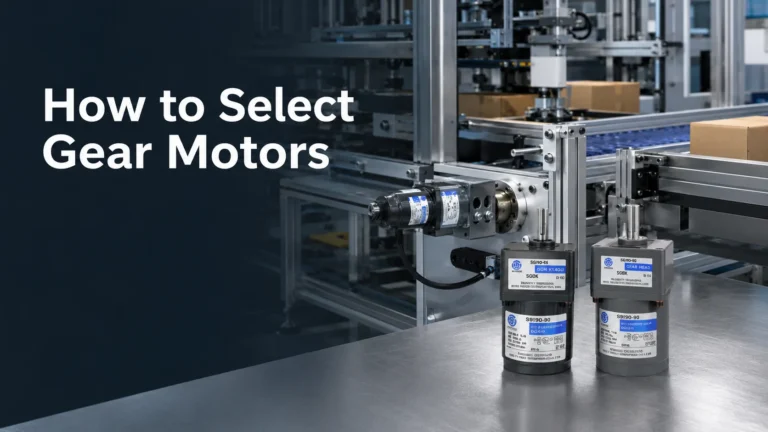
To select gear motors correctly, start at the driven load: define the required output speed, continuous and peak torque, duty cycle, power supply, mounting, shaft loads, and operating environment.