Gear Reduction Motor vs Gear Motor: Definitions and Key Differences
Published: Author: JellyDai
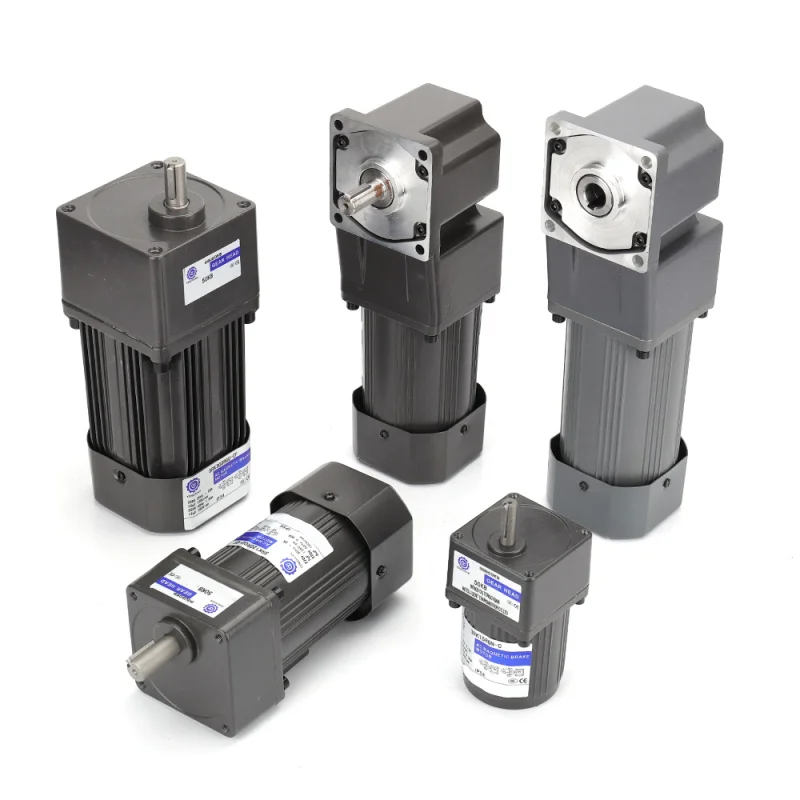
A gear reduction motor and a gear motor both combine an electric motor with a gear train, but manufacturers use the two terms differently. In practice, “gear motor” is the broader term for any motor-plus-gearbox assembly, while “gear reduction motor” usually describes a unit built to reduce output speed and increase torque. This guide defines both terms, compares integrated and modular designs, and explains how to choose the right option for your application.
Terminology Note: Naming Varies by Manufacturer
There is no universal standard that fixes the boundary between “gear motor” and “gear reduction motor.” Some suppliers use the two terms interchangeably; others reserve “gear reduction motor” for a unit whose primary purpose is speed reduction and torque multiplication. Always confirm the rated output speed, torque, gear ratio, and construction on the nameplate or data sheet rather than relying on the label alone.
What Is a Gear Motor?
A gear motor is an AC or DC electric motor combined with a gear train. Its main job is to deliver higher torque at a lower output speed than the motor alone would provide. Instead of relying on a much larger motor to drive a heavy load directly, the gear train performs RPM reduction and torque multiplication to do the work efficiently.
The Integrated Gearmotor
An integrated gearmotor is a design in which the speed reducer and the motor are engineered and built together as a single unit. This configuration is common in compact industrial drives because it:
Keeps a compact footprint: merging the components saves space and fits tight machinery enclosures.
Avoids field alignment: because the unit is manufactured as one assembly, there is no motor-to-gearbox shaft alignment to set up on site.
Reduces maintenance: factory-matched internal alignment lowers vibration and helps extend service life.
What Is a Gear Reduction Motor?
A gear reduction motor is a gear motor designed specifically to reduce output speed and increase output torque through its gearbox. The term is often used for a motor coupled to a speed reducer, whether the two are sold as one integrated unit or supplied separately and bolted together at installation. For example, a small AC gear reducer motor (300W) combines reduction with a compact AC motor to handle heavy loads.
Modular Motor and Reducer
In a modular setup, a standard electric motor is bolted to a standalone gearbox. This two-piece arrangement offers practical advantages:
Flexibility: the motor or reducer can be replaced independently if application requirements change.
Targeted maintenance: if one component fails, only that part needs to be swapped.
Precise sizing: engineers can match a standard motor to a specific gearbox to hit exact torque and speed requirements.
Gear Reduction Motor vs. Gear Motor: The Core Differences
The practical difference usually comes down to construction and how the motor and reducer are combined. The table below compares an integrated gear motor with a modular motor-and-reducer assembly.
Quick Comparison
Feature
Integrated Gear Motor
Modular Gear Reduction Motor
Construction
Single, factory-built unit.
Motor and standalone reducer assembled together.
Space & footprint
Compact.
Typically larger.
Maintenance
Unit-level replacement.
Individual component replacement.
Engineering effort
Minimal at installation.
More upfront, flexible long-term.
Key Factors Explained
Construction: an integrated unit merges the reducer and electric motor into one housing. A modular setup relies on bolting a motor to a separate gearbox.
Space and footprint: integrated units suit tight spaces. For example, a 250W small AC gear reducer motor provides torque multiplication without dominating the machine footprint. Modular systems typically take up more room.
Maintenance and replacement: with an integrated unit you generally replace the whole assembly. Modular setups let you keep the gearbox and swap only the motor.
Engineering cost: integrated units avoid alignment and coupling calculations. Modular systems need that initial engineering, but allow component-level swaps later. For lighter-duty equipment, a 180W small AC gear reducer motor can simplify purchasing.
Why Speed Reduction Matters
Speed reduction exists to balance power and efficiency:
High-speed motors vs. heavy loads: a standard electric motor runs most efficiently at high speed, but many industrial applications need slow, heavy movement. Connecting a high-speed motor directly to such a load can overload and damage the motor.
Torque multiplication: speed and torque have an inverse relationship. Lowering the speed through RPM reduction raises the available torque. For example, a small AC gear reducer motor (140W) in a conveyor slows the output shaft to deliver the torque needed to move product.
Inertia matching: a speed reducer acts as a mechanical buffer. High-inertia loads resist starting and stopping; the gearbox absorbs reflected loads and protects the motor from sudden shocks.
Gear Types in Gear Reduction Motor and Gear Motor Setups
Both integrated and modular drives rely on the same gear technologies to perform speed reduction. Understanding these gear reducer types helps clarify how each design handles torque multiplication:
Planetary gears: a planetary gear motor provides high torque density in a compact coaxial package, useful for inline layouts and precise positioning.
Worm gears: a worm gear reducer offers high reduction ratios in a right-angle arrangement and can help hold loads in place.
Helical and spur gears: these are common in parallel-shaft applications for smooth, consistent speed reduction over demanding duty cycles.
How to Choose the Right Solution for Your Application
When deciding between an integrated gear motor and a modular gear reduction motor, evaluate these factors:
Calculate load requirements: identify the output torque and speed (RPM reduction) you need. For lighter tasks, a 15W small AC gear reducer motor may be sufficient. For heavier industrial tasks, confirm the gearbox can handle the reflected loads without overheating.
Assess spatial constraints: if the footprint is tight, the compact, single-piece design of an integrated gearmotor is ideal. If space allows, a modular gearbox assembly provides flexible mounting options.
Consider duty cycles: for round-the-clock operations where wear is inevitable, a modular setup lets you replace a worn speed reducer without discarding a functioning motor. For lighter or intermittent duty, an integrated unit reduces upfront engineering time.
Is a gear reduction motor the same as a gear motor?
The two terms overlap, and naming varies by manufacturer. A gear motor is any electric motor combined with a gear train. A gear reduction motor is a gear motor designed to reduce output speed and increase output torque. Check the rated speed, torque, and ratio rather than assuming from the label.
Which is better: an integrated or a modular gear motor?
It depends on your constraints. Integrated units suit compact spaces and simple installation; modular assemblies offer component-level flexibility and targeted maintenance. Compare footprint, duty cycle, and long-term service plans.
Do you need a gear reduction motor for every application?
No. If the load operates near the motor’s rated speed and the direct-drive motor delivers enough torque, a reducer may add unnecessary cost and complexity. For more on when reduction is justified, see our guide to the purposes of a gear reduction motor.
If you are selecting a drive for a specific machine, contact Tenchuan with your speed, torque, mounting, and duty requirements for model guidance.
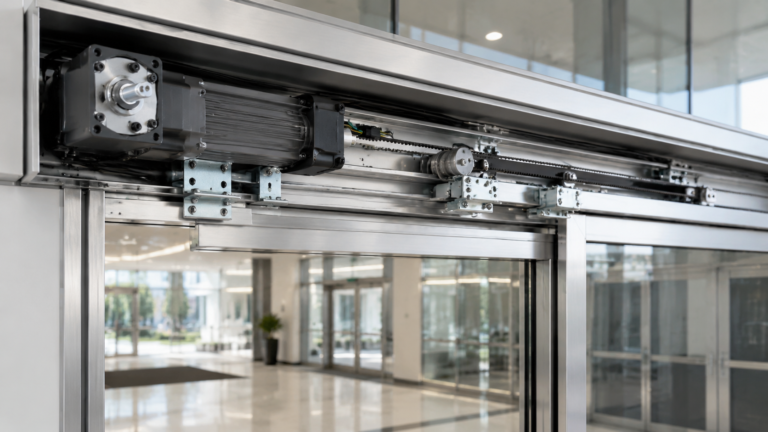
Practical guide to selecting a gear motor for door openers: calculate required torque and output speed, understand self-locking worm gear drives, and match the right AC gear motor to your door type.
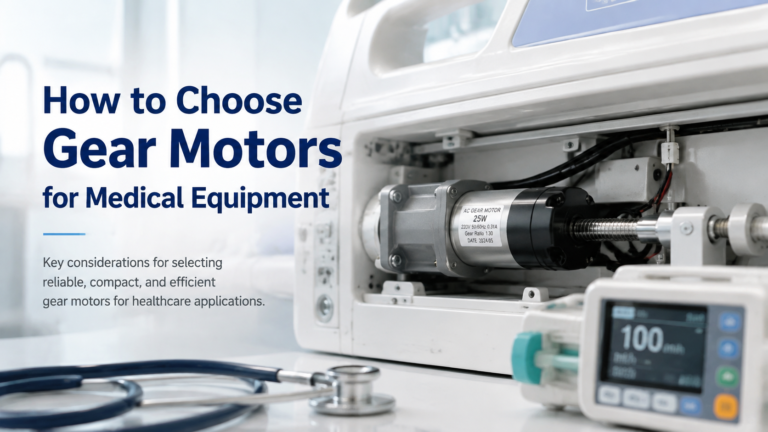
Selection guide for gear motors used in hospital beds, infusion pumps, ventilators, lab equipment and other medical devices. Covers noise, precision, IEC 60601-1 safety, IP rating and self-locking requirements, plus a step-by-step selection workflow and application table.
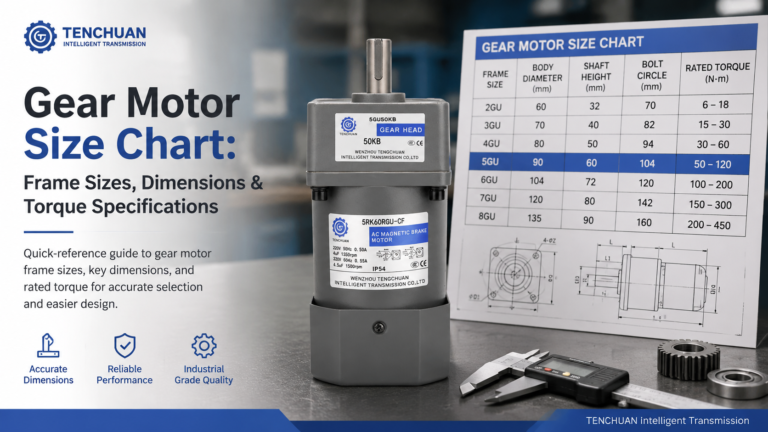
Read a practical gear motor size chart for small AC gear motors. Frame sizes 60-104 mm, dimensions, rated torque and RPM at common ratios, mounting styles.